
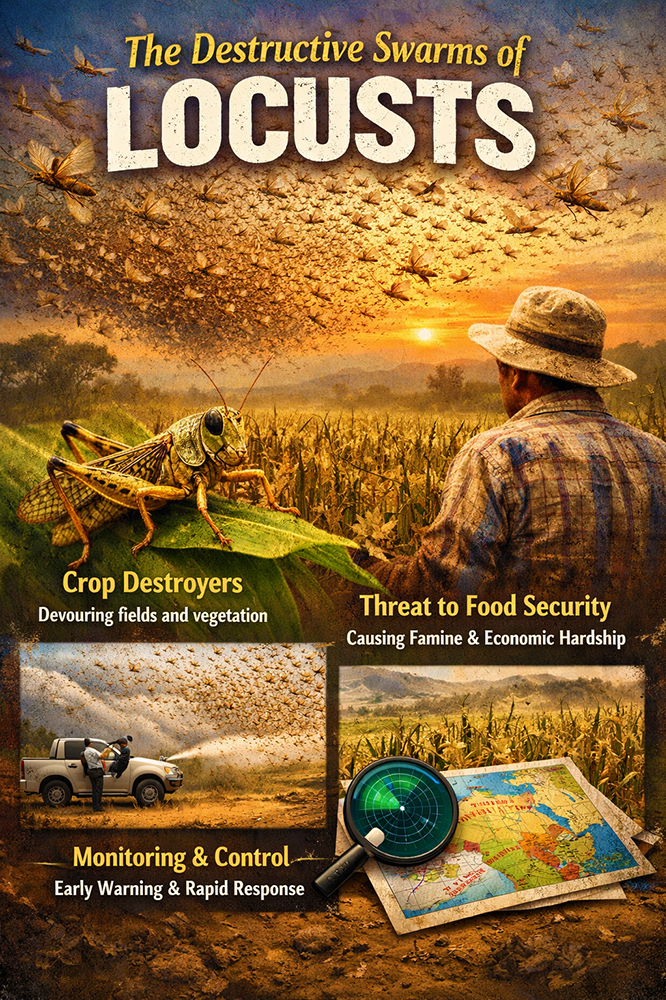
Locusts are large, migratory insects that belong to the grasshopper family and are known for their dramatic swarming behavior. Under normal conditions, locusts live solitary lives, but when environmental factors such as heavy rainfall create abundant vegetation, their population can rapidly increase. This overcrowding triggers a biological change, causing them to gather into massive swarms that can travel hundreds of kilometers in a single day. These swarms consume vast amounts of crops and vegetation, posing a serious threat to food security and agriculture, especially in arid and semi-arid regions. Throughout history, locust plagues have caused famine and economic hardship in many parts of the world. Effective monitoring, early warning systems, and coordinated control efforts are essential to reduce the devastating impact of locust outbreaks on farming communities.